Overview

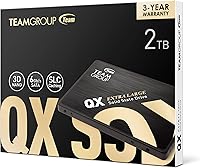
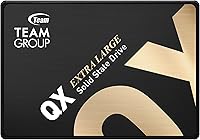
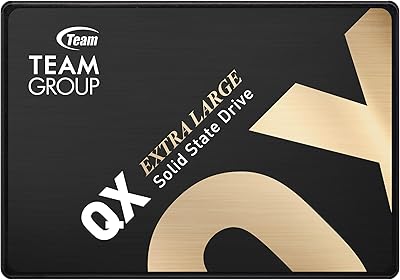
The TEAMGROUP QX 2TB SATA SSD is a straightforward, high-capacity upgrade aimed at everyday users who need more storage without spending a fortune. TEAMGROUP is a Taiwanese memory brand that has quietly built credibility in the value-storage space, and this QX 2TB continues that trend. It uses a 2.5-inch form factor with a SATA III interface — the right fit for older laptops and desktops that don't have an NVMe slot available. One spec that genuinely stands out for the price is the 690 TBW endurance rating, which is unusually generous for a QLC-based drive. That said, SATA has a hard speed ceiling, and this drive doesn't try to exceed it — nor should it.
Features & Benefits

At its core, this 2TB SATA SSD hits read and write speeds of up to 560 and 500 MB/s respectively — essentially the practical limit of SATA III, so you're getting full use of the interface. The SLC caching layer is the real workhorse for daily use, buffering bursts of write activity so things stay snappy when you're copying files or loading software. Where you need to be realistic is with sustained heavy writes. Because this drive uses QLC 3D NAND, speeds can slow noticeably once the cache fills during long transfers — not a dealbreaker for most users, but worth knowing. The slim 0.28-inch profile and sub-one-ounce weight make physical installation straightforward in almost any compatible machine.

Best For

This TEAMGROUP QX drive makes the most sense as an HDD replacement in an older laptop or desktop that tops out at SATA. If you've been living with a slow spinning disk and your machine doesn't support NVMe, swapping in this QX 2TB will be one of the most noticeable upgrades you can make. It also works well as a secondary storage drive in a desktop rig, paired with a faster NVMe boot drive. Students, media enthusiasts, and anyone sitting on a large library of photos, videos, or files will appreciate 2TB of fast, quiet storage at this price point. It's not the right pick for heavy video editing or workloads demanding consistent high-speed writes.

User Feedback

With over 11,000 ratings averaging 4.5 stars, this 2TB SATA SSD has earned a place among the better-reviewed drives in its category — sitting at #39 in Internal SSDs is a meaningful data point, not just a badge. Buyers most commonly praise how easy the installation is and how dramatic the speed difference feels compared to their old hard drive. Quiet operation comes up repeatedly too. On the flip side, some users note write speed throttling during large file transfers, which aligns with expected QLC NAND behavior. A small number mention slow warranty support responses. Long-term owners, though, tend to report consistent, dependable performance — and for a storage drive, that peace of mind counts.

Pros

  • Turns an old HDD-equipped laptop into a noticeably faster machine for a reasonable outlay.
  • 2TB of storage is genuinely useful — enough for large media libraries, game installs, and project archives.
  • The 690 TBW endurance rating is unusually high for a QLC drive at this capacity and price tier.
  • Standard 2.5-inch form factor means straightforward installation — no specialized tools or expertise needed.
  • Completely silent operation is a welcome change for anyone coming from a spinning hard drive.
  • SLC caching keeps everyday read and write tasks feeling responsive under normal workloads.
  • Long-term owners consistently report stable, reliable performance with no degradation over time.
  • Slim 0.28-inch profile fits cleanly into tight laptop bays and compact desktop chassis.
  • Ranked #39 in Internal SSDs with over 11,000 reviews — broad, real-world validation at scale.
  • Solid pick as a secondary storage drive in a desktop paired with a faster NVMe boot drive.

Cons

  • Write speeds drop sharply during large, sustained transfers once the SLC cache is exhausted.
  • No bundled accessories — no mounting adapter, screws, or migration cable included in the box.
  • Companion software is dated and lacks the polished drive management tools that rival brands offer.
  • Warranty support has drawn consistent criticism for slow response times and difficult RMA processes.
  • QLC NAND is inherently less write-enduring than TLC alternatives, which matters for heavy daily use.
  • Synthetic benchmarks can overstate peak performance; real-world sustained speeds are lower than advertised figures suggest.
  • Plastic casing feels less premium than metal-shelled competitors in the same price range.
  • No NVMe version exists in this lineup — buyers whose boards support M.2 should look elsewhere.
  • Drive health monitoring requires third-party tools; there is no first-party solution worth relying on.
  • Pricing is competitive but not always the cheapest option — rival QLC drives occasionally undercut it during sales.

Ratings

The TEAMGROUP QX 2TB SATA SSD earned its scores through AI analysis of thousands of verified global buyer reviews, with spam, bot submissions, and incentivized feedback actively filtered out before any scoring was applied. What emerges is an honest picture: this QX 2TB punches above its weight for everyday upgraders, but has real limitations that informed buyers should weigh carefully. Both the genuine strengths and the recurring frustrations are reflected transparently in every category below.
Value for Money
93%
Buyers consistently describe this 2TB SATA SSD as one of the most cost-efficient ways to get serious storage capacity into an older machine. For users replacing a sluggish hard drive, the price-to-capacity ratio is hard to argue with, and most feel they got more than their money's worth within the first week of use.
A small segment of buyers who compared it directly against competing QLC drives noted that occasional sales from rival brands can undercut its pricing, making the value proposition slightly less consistent over time. It's strong overall, but not always the undisputed cheapest option on any given day.
Read Speed Performance
84%
Sequential reads hitting close to the 560 MB/s ceiling translate to noticeably fast boot times, application launches, and file-open speeds in everyday tasks. Users upgrading from spinning hard drives report that loading large photo libraries or opening video projects feels dramatically more responsive.
Buyers coming from NVMe systems — or those who tested this drive with benchmarking tools — note that real-world read speeds rarely sustain at the advertised peak. The SATA interface itself is the limiting factor here, not the drive, but it can still feel underwhelming to users with higher expectations.
Write Speed & Sustained Performance
61%
39%
For typical day-to-day writing tasks — saving documents, downloading files, installing apps — the SLC cache does a solid job of keeping things feeling fast. Users who transfer moderate-sized files regularly report no noticeable sluggishness in routine use.
This is where the QLC NAND shows its limits. Once the SLC cache is exhausted during large, sustained transfers — think moving 50GB+ of video files — write speeds can drop sharply. Several users flagged this during large media backups, and it is a genuine consideration for anyone who regularly handles bulk file operations.
Endurance & Longevity
88%
The 690 TBW rating is one of the more impressive specs on this drive relative to its price tier. Long-term owners who have been running this QX 2TB for a year or more frequently report zero degradation in perceived performance, which aligns with the above-average endurance rating for a QLC-based product.
Some technically minded users point out that the 690 TBW figure, while generous for QLC, is still lower than what TLC-based alternatives can offer. For users writing hundreds of gigabytes daily — video editors, data hoarders — the endurance advantage shrinks faster than it might for casual users.
Installation Ease
94%
Installation is one of the most universally praised aspects of this drive. The standard 2.5-inch form factor drops straight into any compatible bay, and users with no prior hardware experience report completing the swap in under ten minutes. The slim, lightweight build makes it easy to handle even in tight laptop chassis.
A handful of users noted that TEAMGROUP does not include mounting screws or a bracket in the box, which can be a minor inconvenience for desktop users whose cases require a 3.5-inch adapter. It is a small omission, but worth knowing before you sit down to install.
Reliability & Stability
86%
The majority of buyers report consistent, trouble-free operation over extended periods. The 1,000,000-hour MTBF claim appears to hold up in practice — reports of sudden failures or data loss are rare relative to the sheer volume of units in use, which is reassuring for a primary storage drive.
A small but recurring subset of reviews mention units that failed within the first few months, which is not unusual at this volume of sales but still worth noting. Whether these reflect manufacturing variance or user error is unclear, but it underscores the importance of maintaining regular backups regardless of drive brand.
Noise & Heat
91%
Buyers who made the switch from mechanical hard drives are almost universally delighted by the complete silence. There are no spinning platters, no audible seek noise, and no vibration — users in quiet home offices and students using laptops in libraries specifically appreciate this.
Under prolonged heavy workloads, some users report the drive running slightly warm to the touch inside poorly ventilated enclosures. It is not a thermal throttling issue in most cases, but users putting this drive in an external USB enclosure for continuous use should ensure adequate airflow.
Compatibility
82%
18%
The standard SATA III interface means this QX 2TB works with the vast majority of laptops and desktops manufactured in the last 15 years. Buyers routinely use it to revive aging ThinkPads, MacBook Pros, and older gaming desktops with equal success, which speaks to its broad hardware compatibility.
TEAMGROUP's own product page flags the need to verify BIOS and motherboard compatibility before purchasing, and a few buyers did encounter issues with older systems that required firmware updates to recognize drives above a certain capacity. It is an edge case, but older hardware owners should double-check before buying.
Software & Ecosystem
58%
42%
The hardware itself performs without needing any companion software, which keeps things simple for non-technical users. Buyers who just want to plug in a drive and use it without configuring anything report a completely friction-free experience out of the box.
TEAMGROUP's companion software suite lags behind what brands like Samsung or Crucial offer. Users looking for robust drive health monitoring, cloning tools, or firmware update utilities are largely on their own, and several reviewers found the available tools dated and inconsistently supported across operating systems.
Packaging & Unboxing
74%
26%
The drive arrives well-protected in simple, no-frills packaging that gets the job done. Buyers who prioritize the product over the presentation generally have no complaints, and the drive typically arrives in pristine condition even with standard shipping.
For a product in this tier, the packaging feels spartan compared to competitors. No bundled accessories, no migration cable, and minimal documentation are recurring observations. Buyers who expected a more complete out-of-box kit — especially first-time upgraders — occasionally felt short-changed.
Brand Trust & Support
67%
33%
TEAMGROUP has built enough of a track record in the memory and storage market that most buyers feel comfortable putting their data on this drive. The brand name carries reasonable weight in value storage circles, and the warranty coverage is present if needed.
Warranty support responsiveness is a repeated complaint in negative reviews. Users who needed to initiate an RMA described the process as slow and sometimes frustrating. For a product that stores irreplaceable files, lackluster post-purchase support is a meaningful drawback that tempers otherwise strong scores.
Form Factor & Physical Design
89%
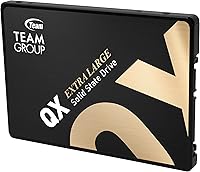
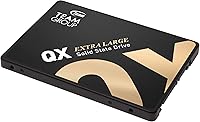
At just 0.28 inches thick and under one ounce, this 2TB SATA SSD fits comfortably in slim laptops and compact desktop cases where bulkier drives struggle. The all-black finish is clean and unobtrusive, and the build feels solid despite the light weight.
The plastic casing, while functional, does not inspire the same confidence as metal-shelled competitors. A few users noted minor flex when handling the drive, though none reported this causing any actual damage or operational issues during normal installation.
Cache Performance Consistency
69%
31%
For the workloads this drive was clearly designed for — everyday computing, light content creation, media playback, and general file storage — the SLC caching layer keeps performance feeling smooth and predictable. Most non-technical users will never notice the cache boundary in normal use.
When the cache fills, the performance cliff is real and measurable. Power users who ran benchmark stress tests observed write speeds dropping to levels typical of uncached QLC NAND. This is not a hidden flaw, but it does confirm that this drive is not suited for write-intensive professional workflows.
Benchmark vs Real-World Gap
72%
28%
In real-world everyday tasks, this QX 2TB performs very close to what buyers expect based on the spec sheet. Boot times, app launches, and moderate file transfers are consistently fast, and most users report that the advertised numbers feel representative of normal use.
Synthetic benchmarks using tools like CrystalDiskMark sometimes show results that don't sustain in longer sequential write tests, leading to a gap between peak advertised figures and average observed performance. Users who make purchasing decisions based purely on benchmark scores may feel slightly misled by the headline specs.

Suitable for:

The TEAMGROUP QX 2TB SATA SSD is the right call for anyone whose machine tops out at a SATA interface and who has been tolerating the noise and sluggishness of an old mechanical hard drive. If you own a laptop from the mid-2010s — a ThinkPad, an older MacBook Pro, a budget Dell or HP — and your only upgrade path is a 2.5-inch SATA bay, this drive will transform daily use without requiring you to buy a new computer. Students storing large project files, photographers archiving raw images, and casual users who just want everything to load faster are squarely in its wheelhouse. It also works well as a secondary drive in a desktop build where a faster NVMe handles the OS and this 2TB SATA SSD absorbs the overflow — media libraries, game installations, backups. Budget-conscious buyers who need genuine capacity without paying a premium for interface speeds their hardware cannot even use will find this a very sensible, low-regret purchase.
Not suitable for:

The TEAMGROUP QX 2TB SATA SSD is not the right tool for anyone who needs consistent, high-throughput write performance. If your workflow involves regularly moving large video files, running virtual machines from the drive, or writing dozens of gigabytes at a stretch, the QLC NAND will bottleneck you once the SLC cache fills — and that slowdown is real, not a benchmark quirk. Users building a new system from scratch who have an available M.2 slot should skip SATA entirely and invest in an NVMe drive; the speed difference is significant and the price gap has narrowed enough to make SATA a hard choice to justify on new hardware. Anyone who values responsive post-purchase support should also think carefully — warranty service from TEAMGROUP has drawn repeated criticism for slow turnaround times, which matters when the drive holds irreplaceable data. Power users, content creators, and professionals who depend on storage performance as part of their daily output will likely outgrow this drive's limits quickly.
Specifications

  • Capacity: This drive offers 2TB of usable storage, suitable for large media libraries, software installations, and file archives.
  • Form Factor: It uses the standard 2.5-inch form factor, compatible with the vast majority of laptops and desktops that accept a 2.5-inch drive bay.
  • Interface: The drive connects via SATA III at 6Gb/s, the current standard for SATA-based internal storage devices.
  • Sequential Read: Peak sequential read speed reaches up to 560 MB/s under optimal conditions as specified by TEAMGROUP.
  • Sequential Write: Peak sequential write speed reaches up to 500 MB/s, achievable during cached write operations under light-to-moderate loads.
  • NAND Type: Storage cells are built on 3D QLC (Quad-Level Cell) NAND flash technology, prioritizing capacity density over sustained write endurance.
  • Cache Technology: SLC (Single-Level Cell) caching is employed to buffer incoming write operations, maintaining responsive performance during everyday tasks.
  • Endurance Rating: The drive is rated for 690 TBW (Terabytes Written), which is notably high for a QLC-based drive at this capacity level.
  • MTBF: The manufacturer rates mean time between failures at 1,000,000 hours, indicating strong expected operational reliability under normal conditions.
  • Dimensions: Physical dimensions measure 3.94 x 2.75 x 0.28 inches, enabling installation in slim laptop chassis and compact desktop bays.
  • Weight: The drive weighs just 0.705 ounces, making it one of the lighter 2.5-inch internal drives available in this capacity range.
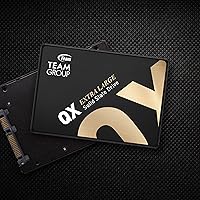
  • Color & Finish: The drive ships in a matte black finish with a plastic outer casing that keeps weight low while maintaining structural integrity during installation.
  • Compatible Devices: Designed for internal installation in both laptops and desktop PCs that feature a 2.5-inch SATA drive bay.
  • Installation Type: This is strictly an internal drive and is not designed for use in external USB enclosures without a compatible third-party adapter.
  • Model Number: The official TEAMGROUP model identifier for this 2TB variant is T253X7002T0C101, useful for warranty registration and firmware lookups.
  • Product Series: This drive belongs to TEAMGROUP's QX series, positioned as their value-focused, high-capacity SATA storage lineup.
  • Manufacturer: TEAMGROUP is a Taiwanese memory and storage manufacturer with a product portfolio spanning SSDs, DRAM, and flash storage accessories.
  • First Available: This specific model was first made available for purchase in April 2023, placing it within a generation of mature QLC NAND technology.
  • Vibration Tolerance: The drive is rated to withstand non-operating vibration up to 20G, providing reasonable protection against shipping and handling stress.
  • Operating System: Compatible with Windows, Linux, and macOS systems that support standard SATA storage devices without requiring proprietary drivers.

Related Reviews
TEAMGROUP QX 1TB 2.5 Inch SATA III SSD
84%
90%
Read/Write Speed
87%
Installation Ease
85%
Reliability
71%
Durability (QLC NAND)
92%
Price-to-Performance Ratio
More
TEAMGROUP QX 4TB SSD
86%
91%
Performance
89%
Ease of Installation
88%
Durability/Endurance
93%
Value for Money
86%
Read/Write Speed
More
TEAMGROUP AX2 2TB SSD
85%
87%
Performance
92%
Value for Money
85%
Speed (Read/Write)
90%
Ease of Installation
70%
Durability
More
TEAMGROUP MS30 2TB SSD
85%
88%
Performance
91%
Value for Money
93%
Ease of Installation
75%
Durability
85%
Data Transfer Speed
More
ORICO Y20 2TB SATA SSD
88%
88%
Performance
85%
Read Speed
82%
Write Speed
91%
Durability
93%
Installation Ease
More
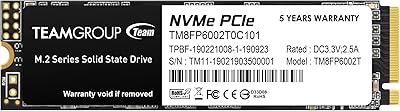
TEAMGROUP MP33 2TB NVMe SSD
86%
91%
Performance
89%
Value for Money
85%
Ease of Installation
88%
Compatibility
82%
Reliability
More
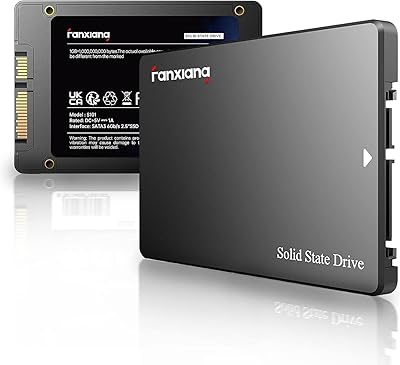
fanxiang S101 2TB SATA SSD
88%
88%
Read/Write Speed
91%
Durability (3D NAND TLC)
93%
Installation Ease
89%
Value for Money
90%
Compatibility (OS Support)
More
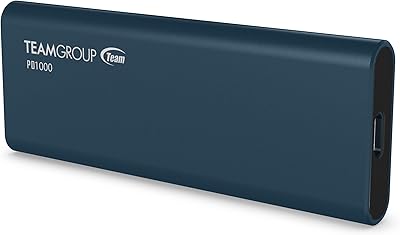
TEAMGROUP PD1000 2TB Portable SSD
87%
92%
Performance
88%
Durability & Build Quality
90%
Transfer Speed
85%
Portability
89%
Waterproof & Shockproof Features
More
Vansuny 2TB SATA III SSD
83%
91%
Value for Money
88%
Performance
94%
Ease of Installation
77%
Durability
89%
Compatibility
More
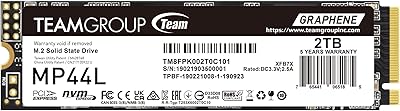
TEAMGROUP MP44L 2TB NVMe SSD
90%
94%
Performance
89%
Thermal Management
91%
Ease of Installation
87%
Value for Money
93%
Build Quality
More

FAQ

Yes, that is exactly the scenario this drive is built for. As long as your laptop has a 2.5-inch SATA bay — which most laptops from roughly 2010 through the early 2020s do — this QX 2TB will slot right in. Just confirm your bay accepts a 2.5-inch drive before ordering, since a small number of ultrabooks use proprietary connectors.

It is a solid choice for storing large media collections. Reading back photos and videos is fast and smooth thanks to the 560 MB/s read speed, and 2TB gives you plenty of room to grow. Just keep in mind that if you regularly import and write hundreds of gigabytes at once, the write speed can slow down once the cache fills — it is fine for storage, but less ideal if writing large files is a constant, daily workflow.

The difference is dramatic. Most users describe it as making their old machine feel like a completely different computer — boot times that took 60 to 90 seconds on a spinning disk can drop to under 15 seconds, and application loading speeds improve similarly. Everyday tasks like opening files, switching between programs, and browsing feel noticeably more responsive almost immediately.

QLC stands for Quad-Level Cell, which means each storage cell holds four bits of data. The trade-off is that QLC NAND is less durable under heavy sustained writes compared to TLC or MLC NAND. For most users — students, home office workers, media consumers — this is not a concern at all. Where it matters is if you are constantly writing large amounts of data every single day; in those cases, the drive may wear faster than a TLC alternative would.

Absolutely. Many buyers use this QX 2TB as their primary boot drive, and it handles that role well. Windows loads quickly, macOS runs smoothly, and the sequential read speeds make application launches feel fast. The one caveat is that if your machine supports NVMe, a similarly priced NVMe drive will give you noticeably faster boot and load times — but for SATA-only systems, this drive is a great OS drive.

No, TEAMGROUP does not include cloning software in the box. However, free tools like Macrium Reflect (Windows) or Carbon Copy Cloner (macOS) work well for migrating your existing operating system and files to the new drive. You will also need a USB-to-SATA adapter cable if you want to clone your old drive while it is still installed, since you can only have one drive connected internally at a time in most laptops.

No, one is not included in the package. If your desktop case requires a 3.5-inch mounting bracket to house a 2.5-inch drive, you will need to pick one up separately — they are inexpensive and widely available. Many modern desktop cases have dedicated 2.5-inch bays that accept this drive directly without any adapter.

TEAMGROUP does not offer a dedicated drive health utility worth relying on, so your best bet is a free third-party tool. CrystalDiskInfo on Windows is the most widely used option — it reads the drive's S.M.A.R.T. data and gives you a clear health status, temperature, and total bytes written. On macOS, DriveDx is a well-regarded paid alternative, and smartmontools works across platforms for command-line users.

TEAMGROUP covers this drive with a limited warranty, though you should verify the current terms on their official site since coverage periods can vary by region. The honest note worth adding is that some buyers have reported slow response times when initiating warranty claims or RMAs. It is a good idea to register your drive after purchase and keep your purchase receipt, and as with any storage device, maintaining regular backups is strongly advisable regardless of warranty coverage.

Yes, the PS4 and PS4 Pro both use a 2.5-inch SATA interface for their internal storage, so this 2TB SATA SSD is physically and technically compatible. It is a popular upgrade choice for console users who have filled up their stock 500GB or 1TB drive. After swapping the drive, you will need to reinstall the PS4 system software from a USB drive following Sony's standard replacement process, which is straightforward and well-documented on PlayStation's support pages.